TrailerHome by NIKITAS — Bilingual Website for a Mobile-Home Manufacturer
Overview
NIKITAS COMPANY has built garage equipment and special steel constructions in Provatas, Serres, since 1977, and has exported since 1981. TrailerHome is its line of mobile homes: complete small homes on a steel trailer chassis, with insulated walls and roof, windows, wiring, plumbing, a kitchen and a bathroom, delivered by truck and set in place by crane in Greece or abroad. They come in three lines — Modern, Classic and Nature — or are designed from scratch with the customer. The site has three jobs: show that range clearly, build trust in the factory behind it, and turn interest into a phone call or an email, because there is no shop and no online form.
Greek is the default and English is a complete second edition: the same fourteen pages under the same file names. The home page opens on three short films, one for each line, that dissolve into one another. Then comes the signature: the Modern Line's elevation, traced from a photograph of the real unit, draws itself line by line as you scroll and makes way for that photograph. Each line has its own page with photos, video and construction details, and a comparison table, a five-step process, a filterable gallery of real units and deliveries, a company timeline and an FAQ on sizes, permits and delivery do the rest. The photos and videos were prepared from the client's own archive, and no photo weighs more than 100 KB.
Challenges
The client had strong material but no words for the web: a phone archive of photos and videos, two flyers, a business card and the flyer from their old website. All of it had to be sorted into lines, uses and stages, then written from scratch in two languages. The product also invites easy promises — no permit needed, ready in weeks, a fixed price — that are not always true, so every sentence about permits, sizes, prices and lead times had to be careful without sounding evasive. And the site had to sell without a shop, a price list or a contact form, while staying fast on a weak mobile connection with a dozen videos on board, because people choosing a plot are often standing on it.
Solutions
Every page is written once as a source file and built into both languages by a small Python script: shared header, menu and footer, responsive images with their real dimensions, and the business details — phones, address, factory coordinates — kept in one place and written from there into the structured data, the map link, the sitemap and a full-text version for AI assistants. A checker tests links, alt text, heading order, canonicals, hreflang, structured data and the 100 KB image budget before every deploy. Animation runs on GSAP and ScrollTrigger and fails open: if the script never arrives, or the visitor prefers less motion, everything is simply shown. The Content Security Policy allows no inline styles and pins the one inline script by its hash. Accessibility was measured in the browser rather than assumed — 4,954 text nodes across every page at phone and desktop widths, with zero issues — and every product and delivery video comes with a text description of what it shows. On permits, the FAQ gives the honest answer: it depends on use, zoning and connections, so ask a local engineer.
Gallery
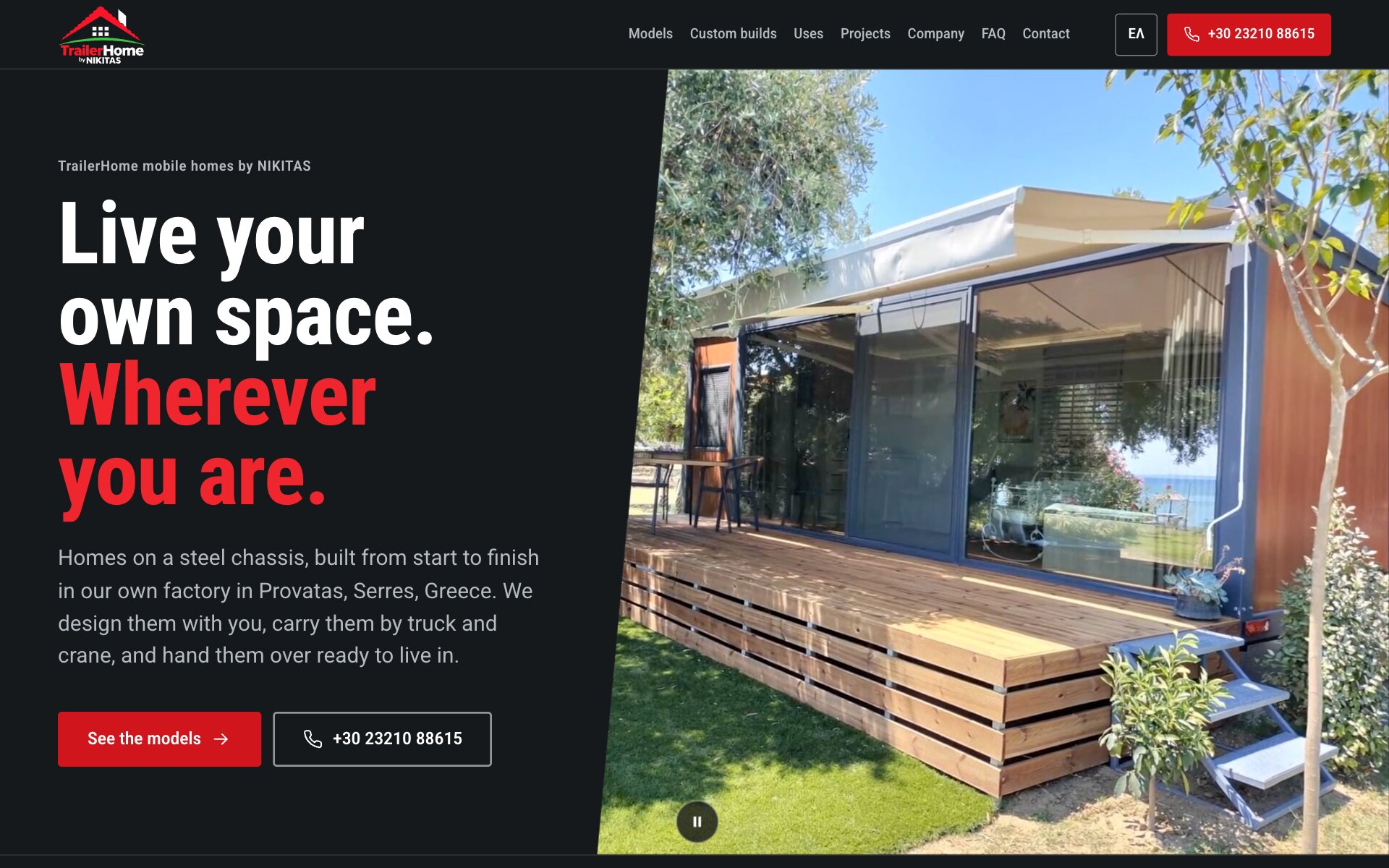
A Home Page That Opens on the Homes Themselves
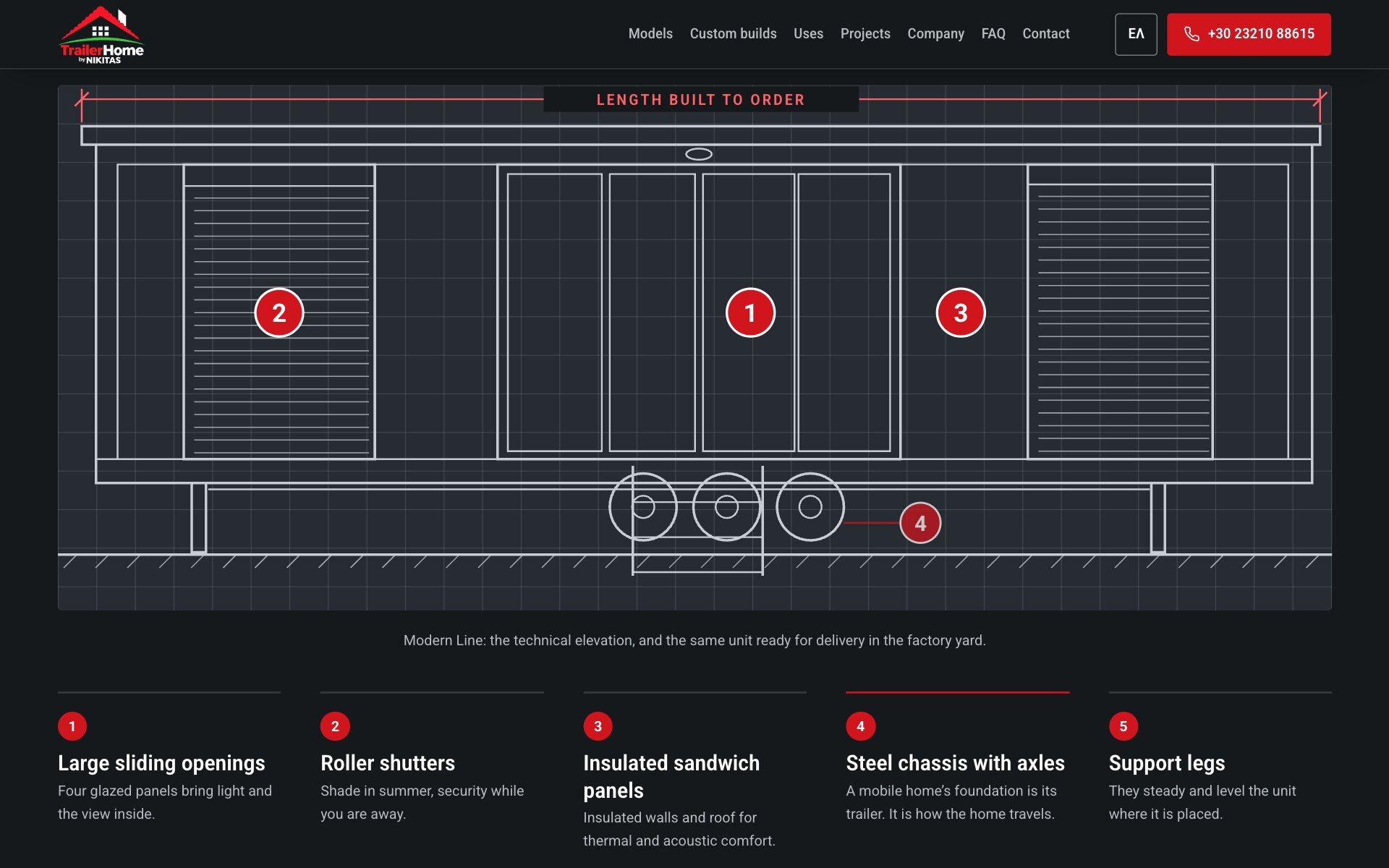
The Signature: An Elevation That Draws Itself as You Scroll
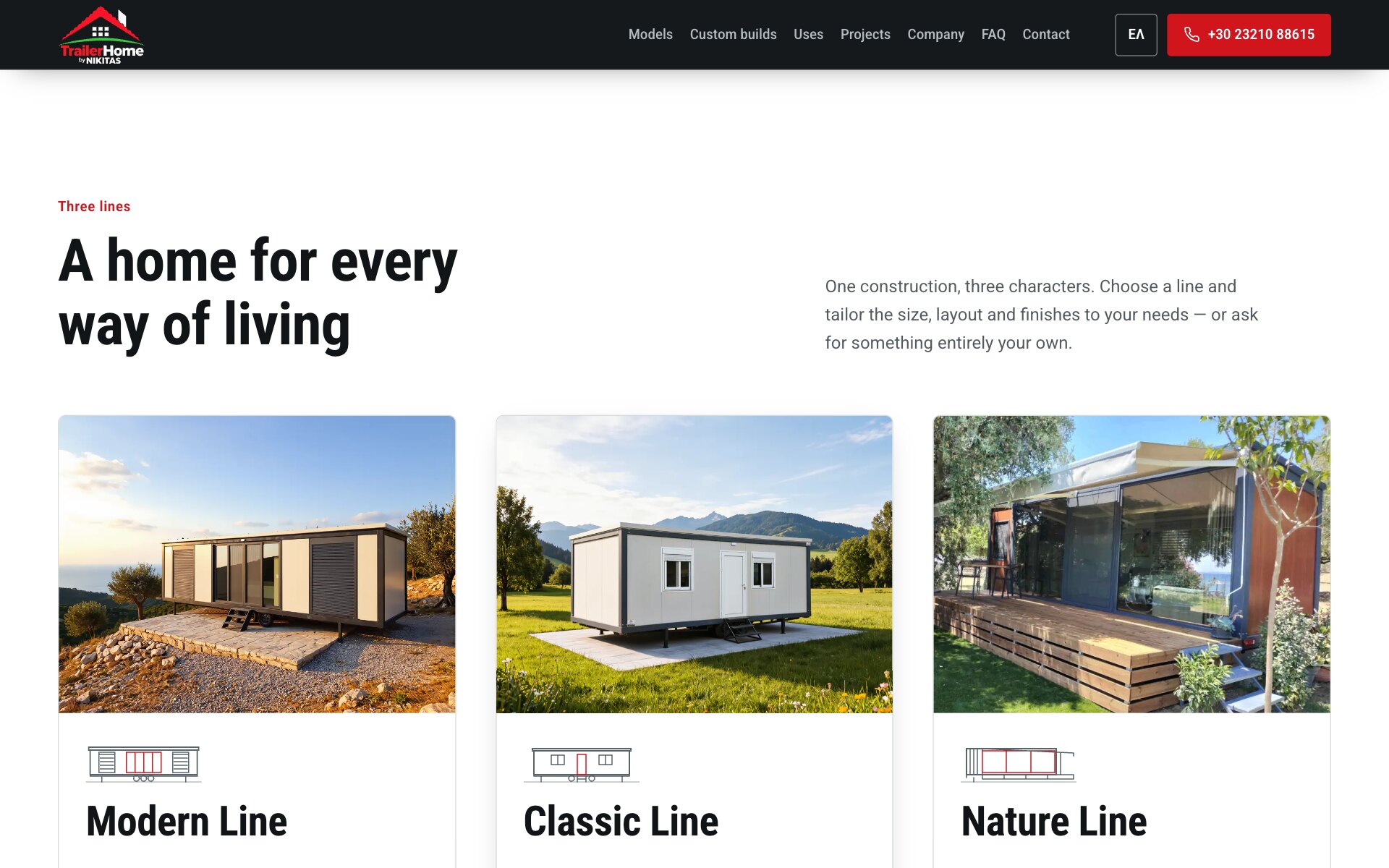
One Construction, Three Characters
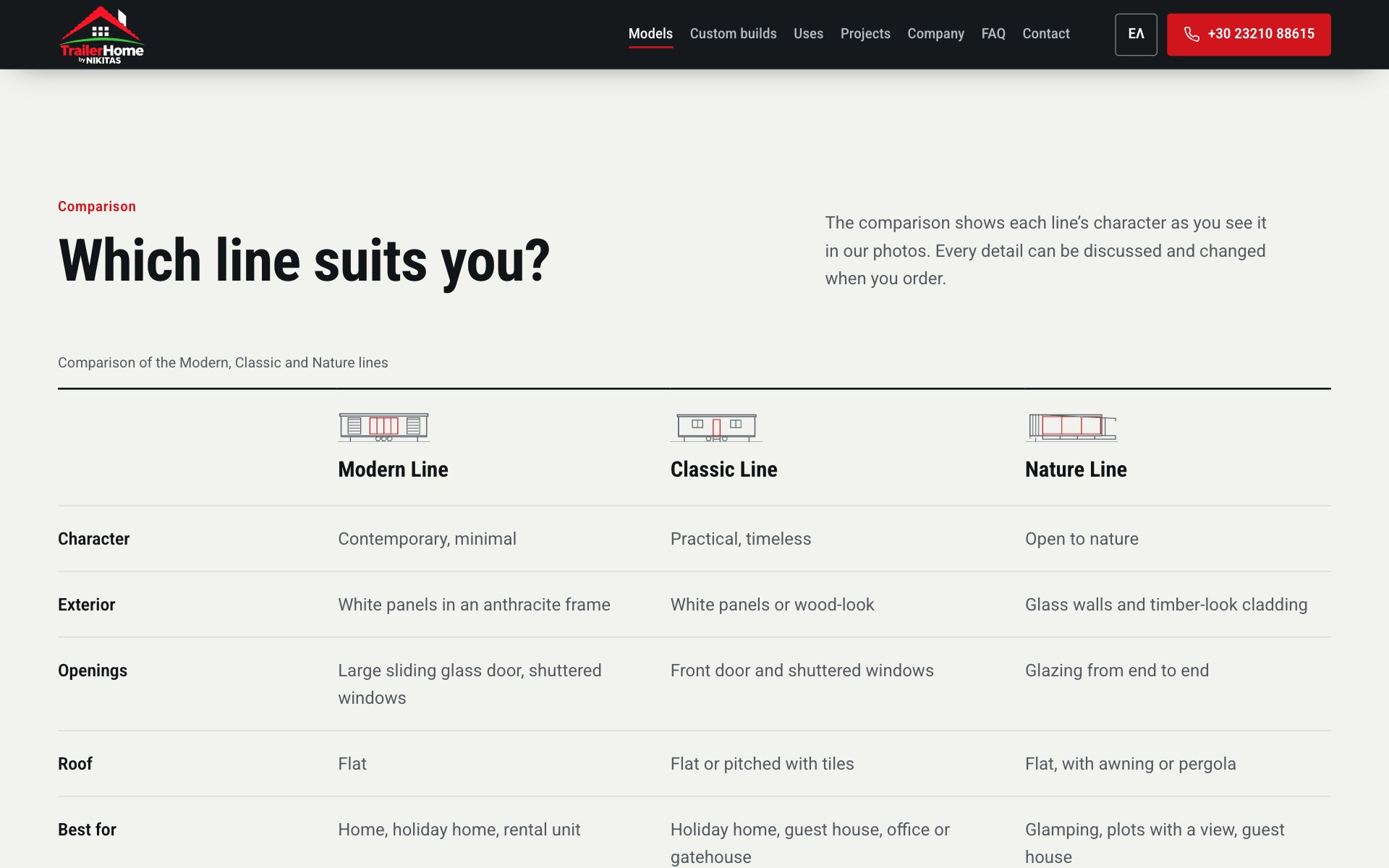
Three Lines Compared in Five Rows
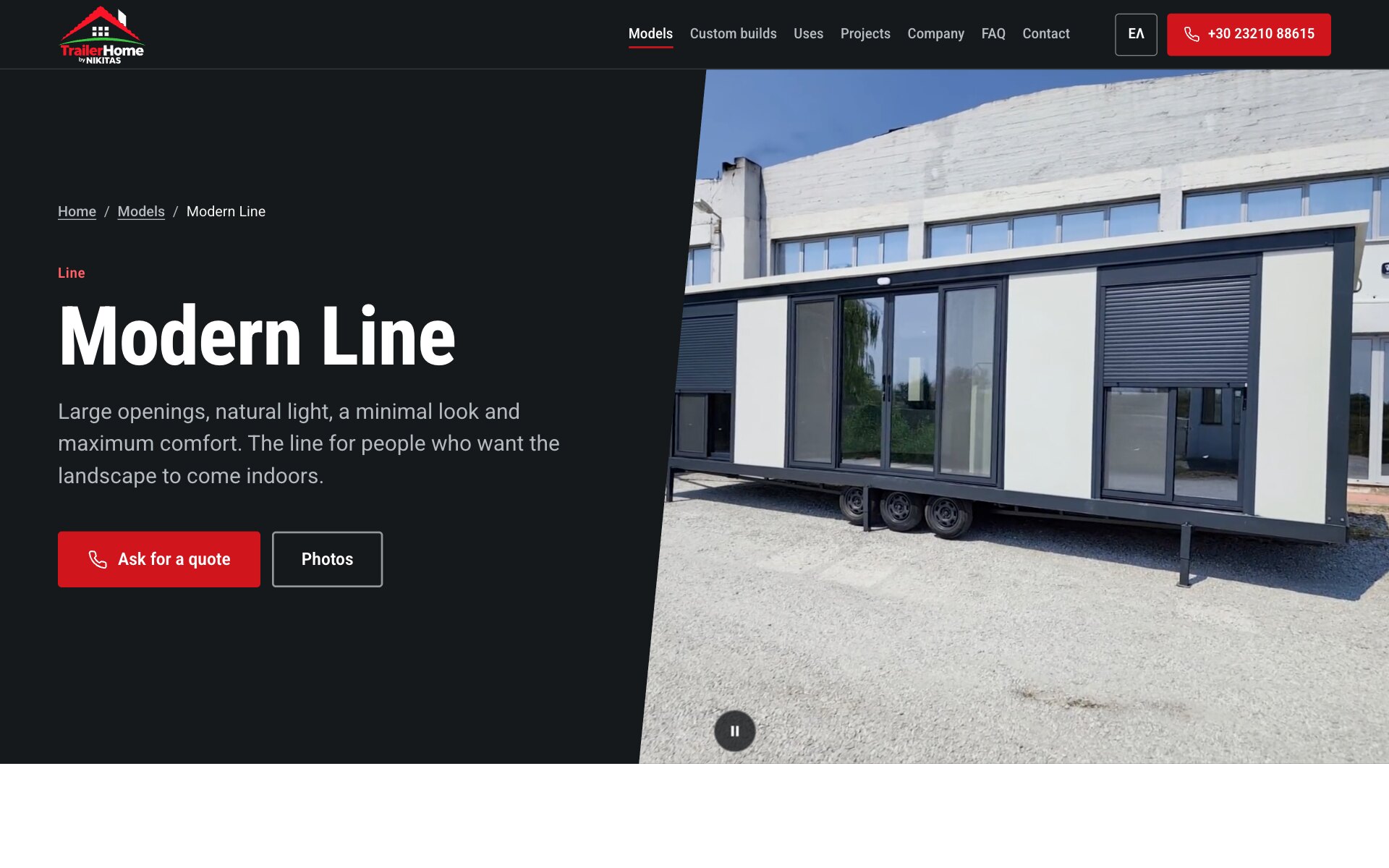
Each Line Gets Its Own Page, Opening on Film
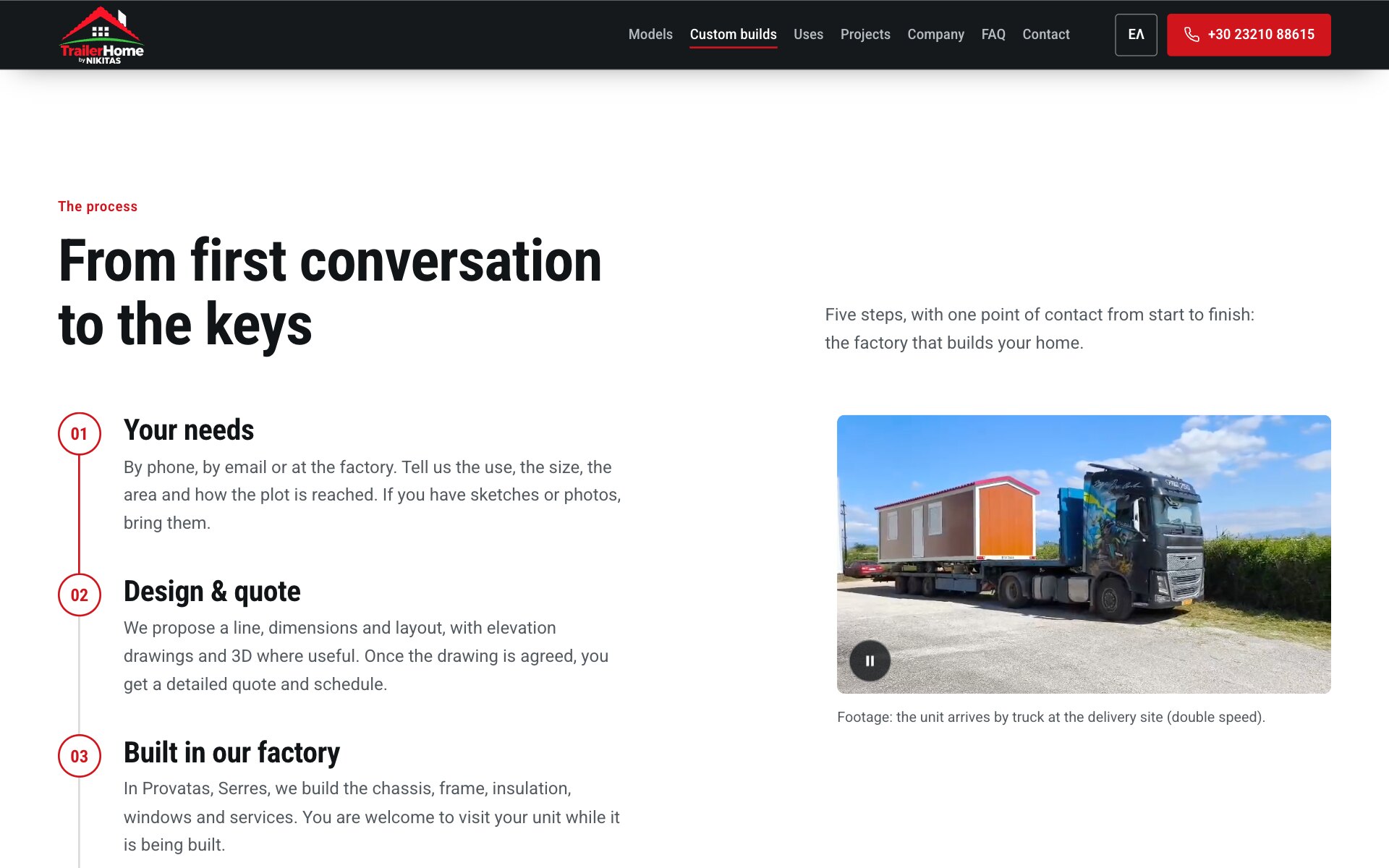
Five Steps, One Manufacturer, No Middlemen
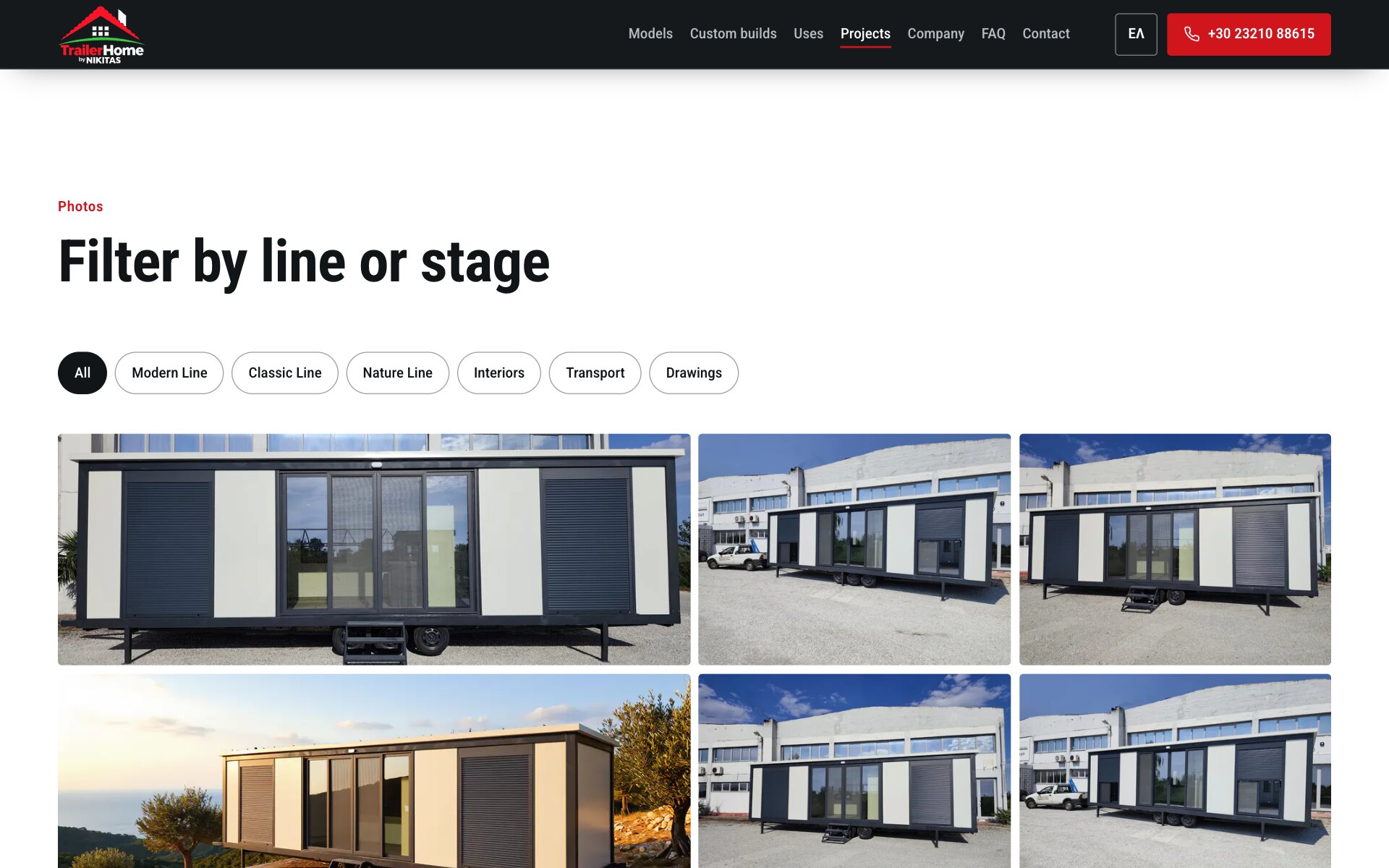
Real Units and Deliveries, Filtered by Line or Stage
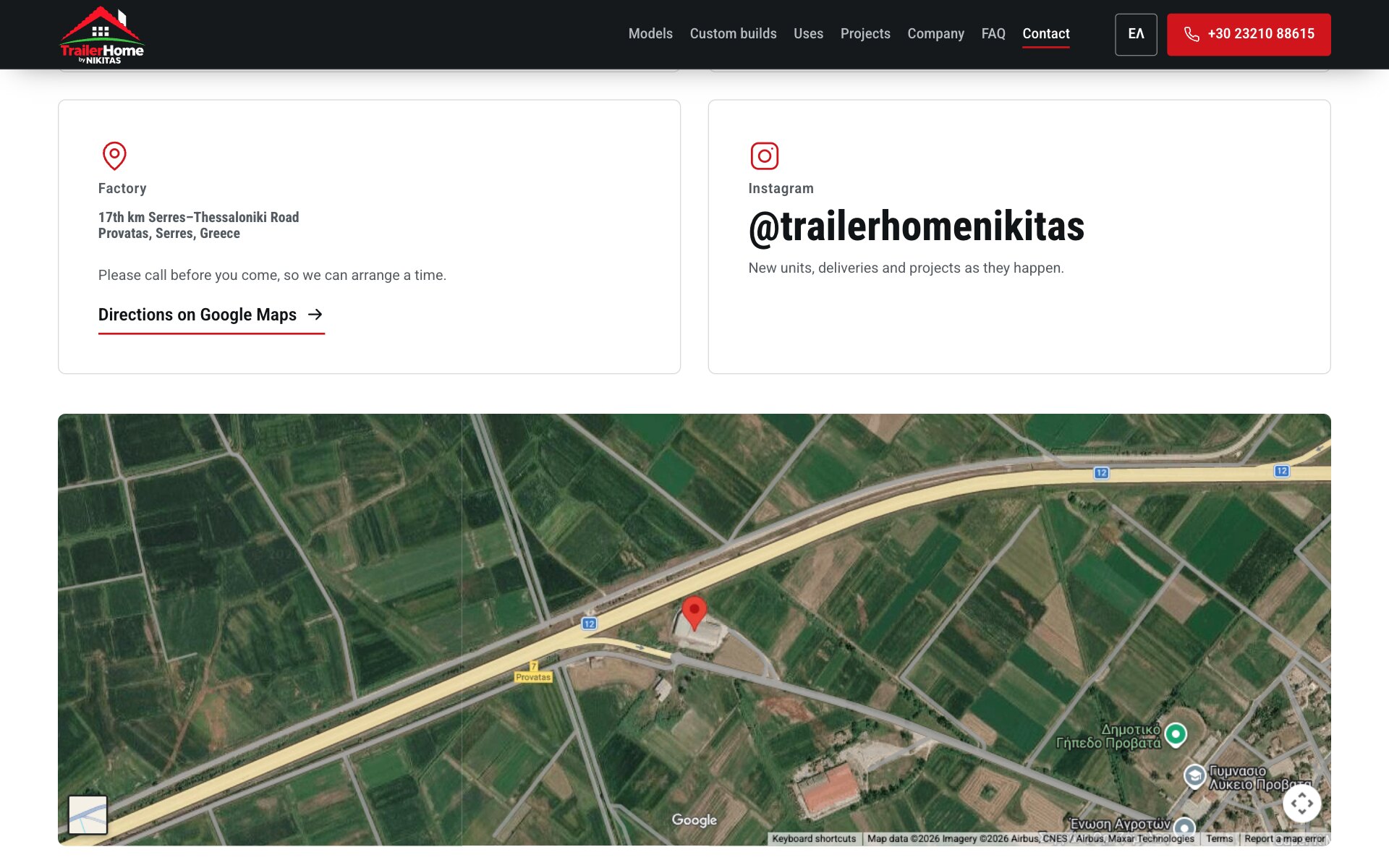
No Form: Call, Write or Drive to the Factory
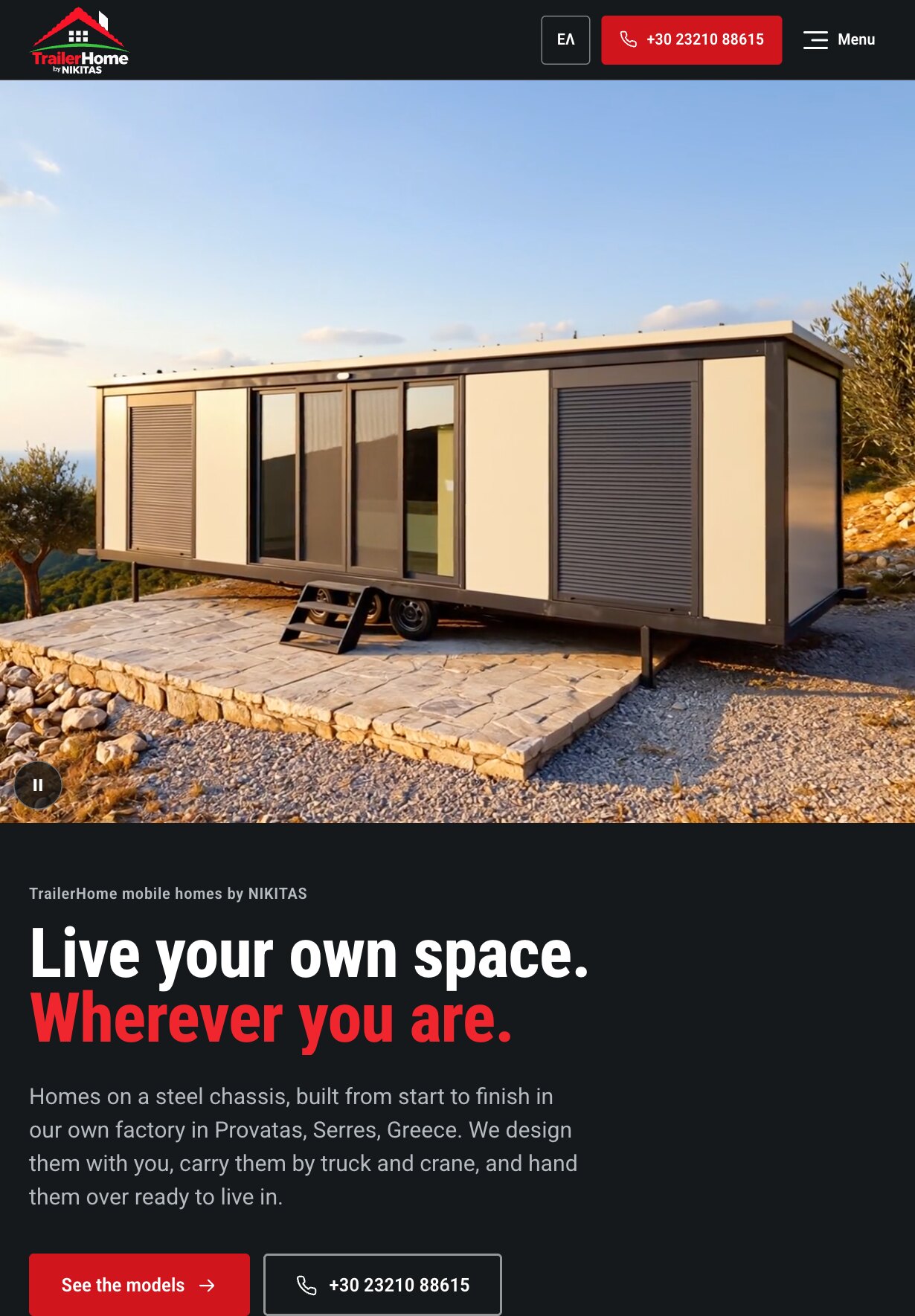
The Hero Plays the Three Lines in Turn, With a Pause Button
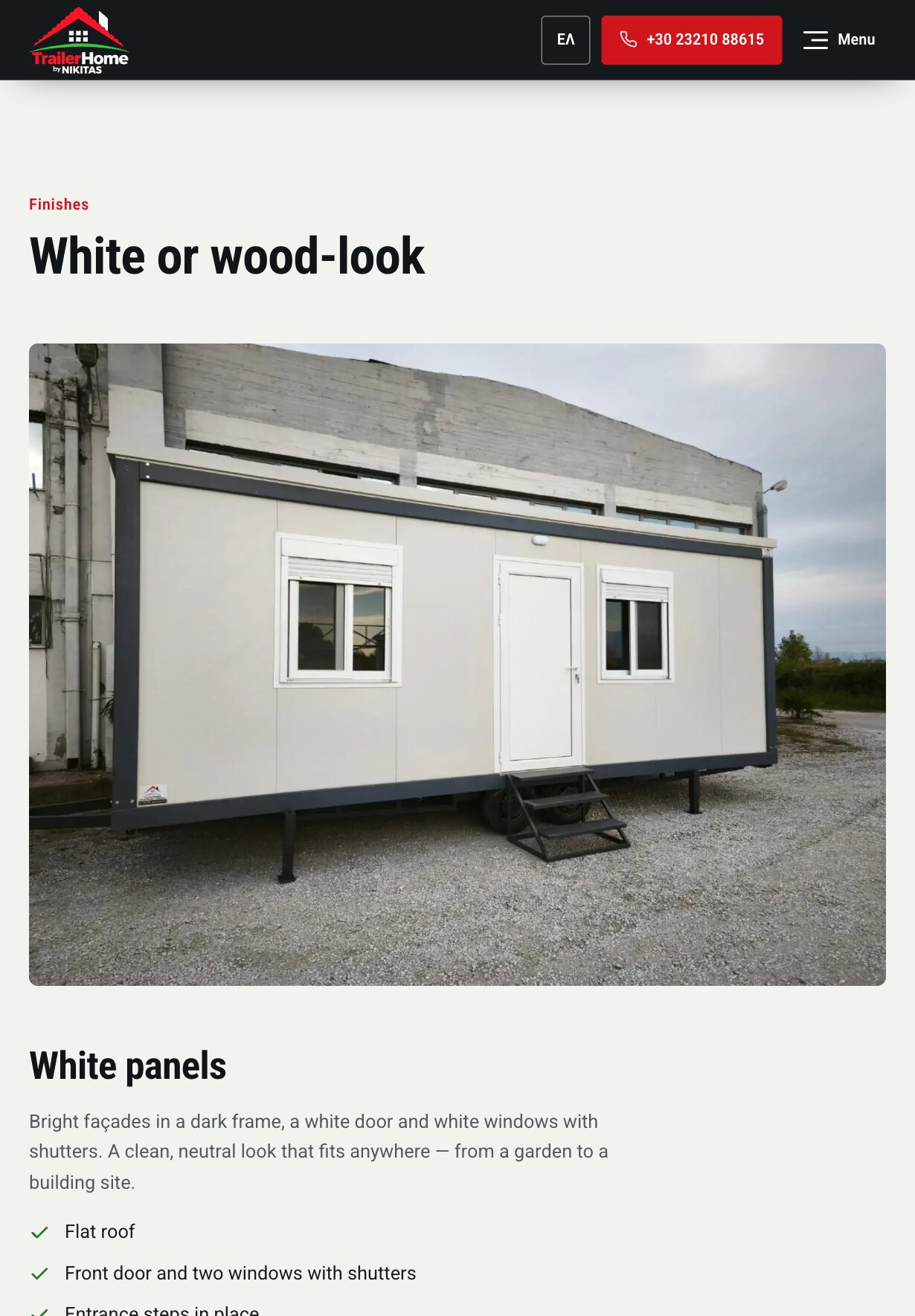
Classic Line Finishes, Shown on the Real Unit
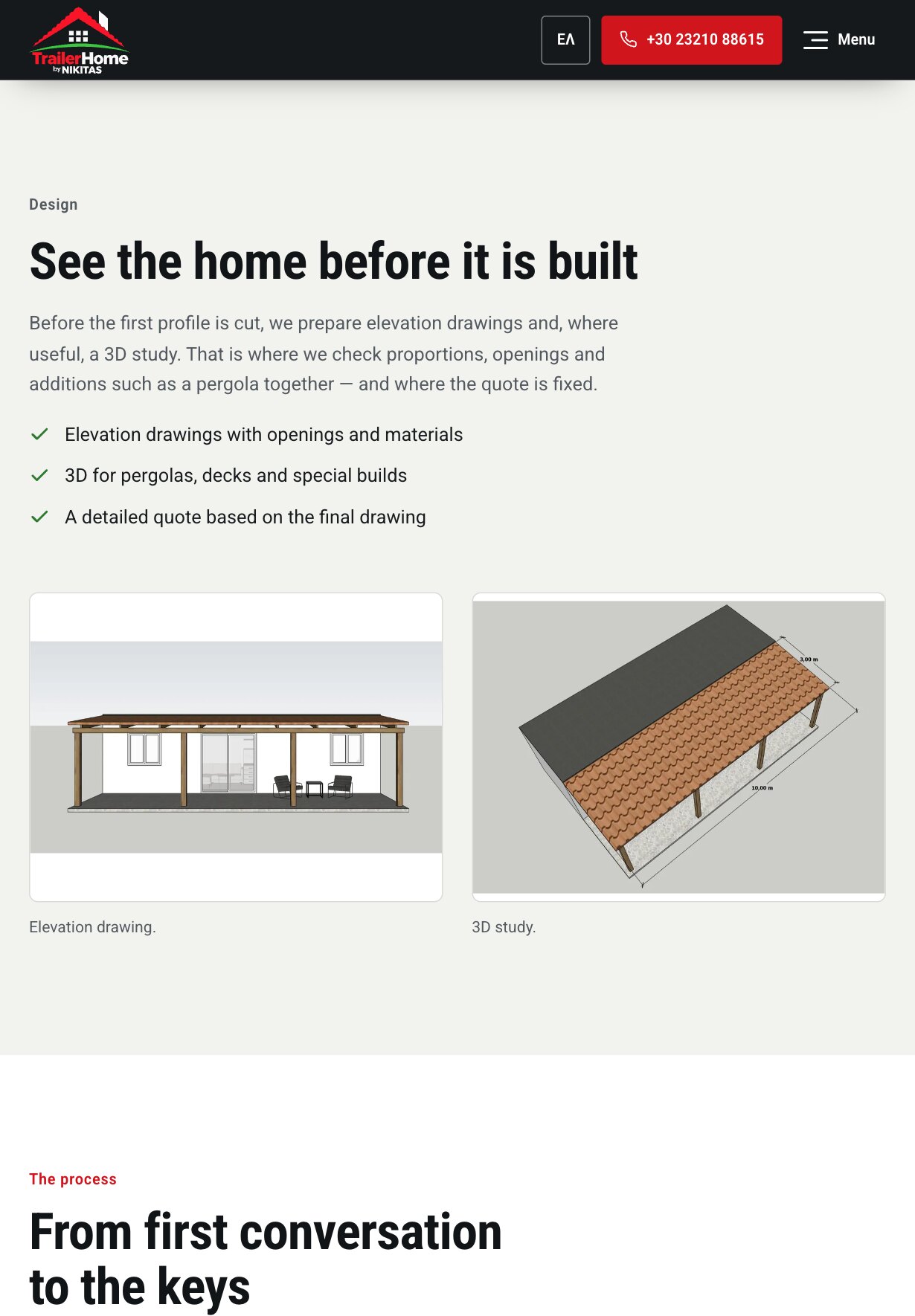
Drawings and 3D Before Anything Is Cut
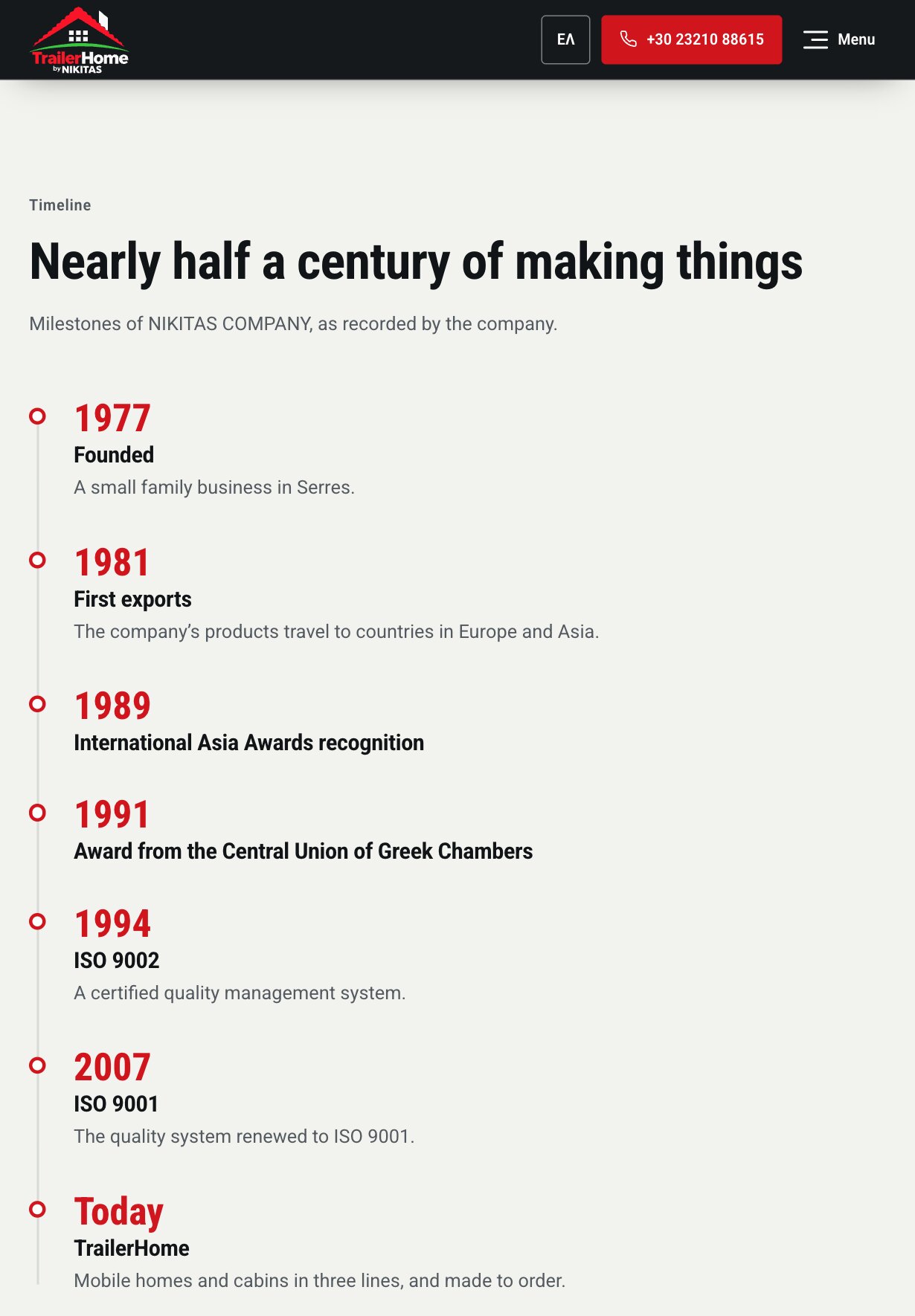
Nearly Half a Century of Making Things, on One Line
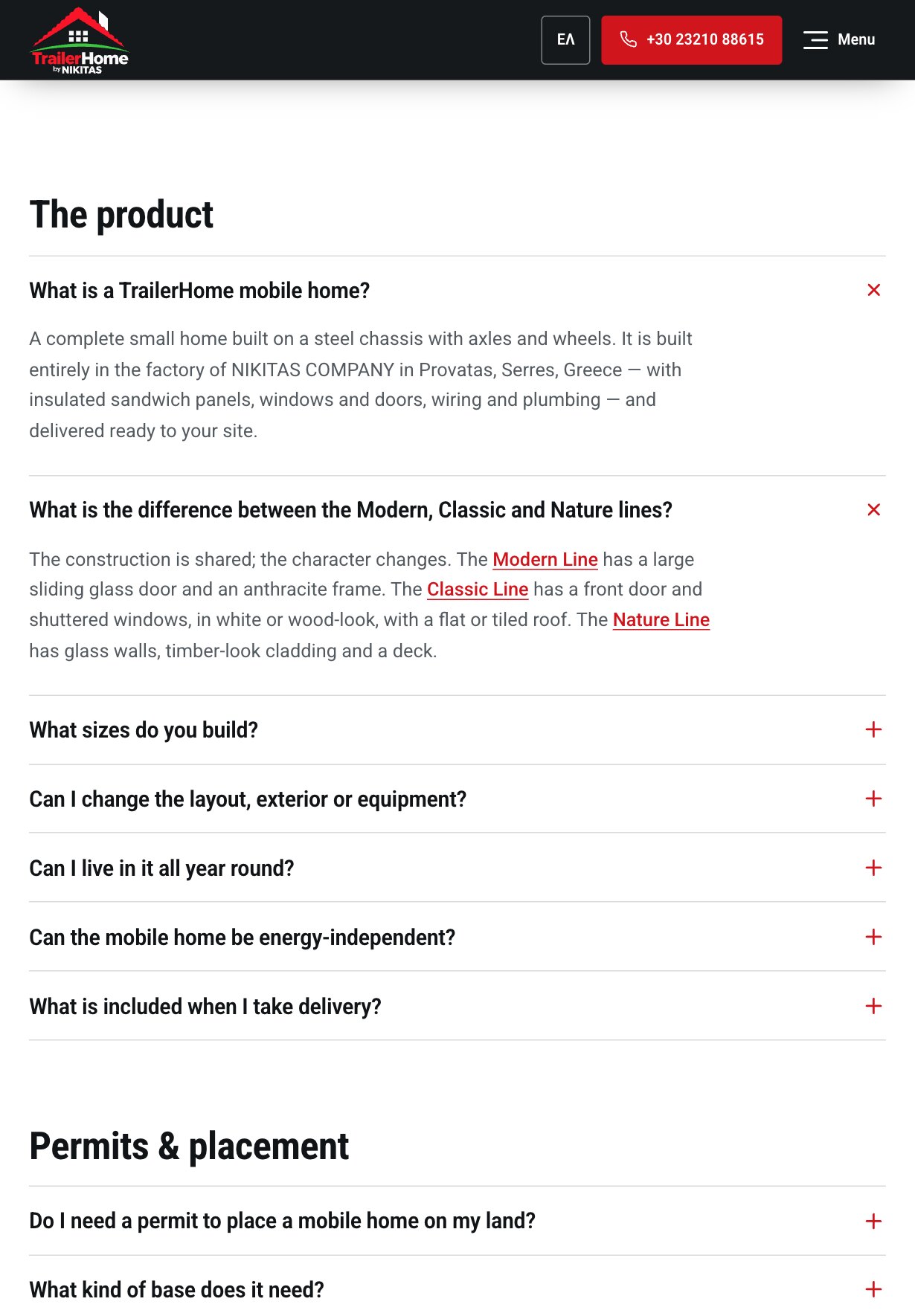
The Questions People Ask Before They Call
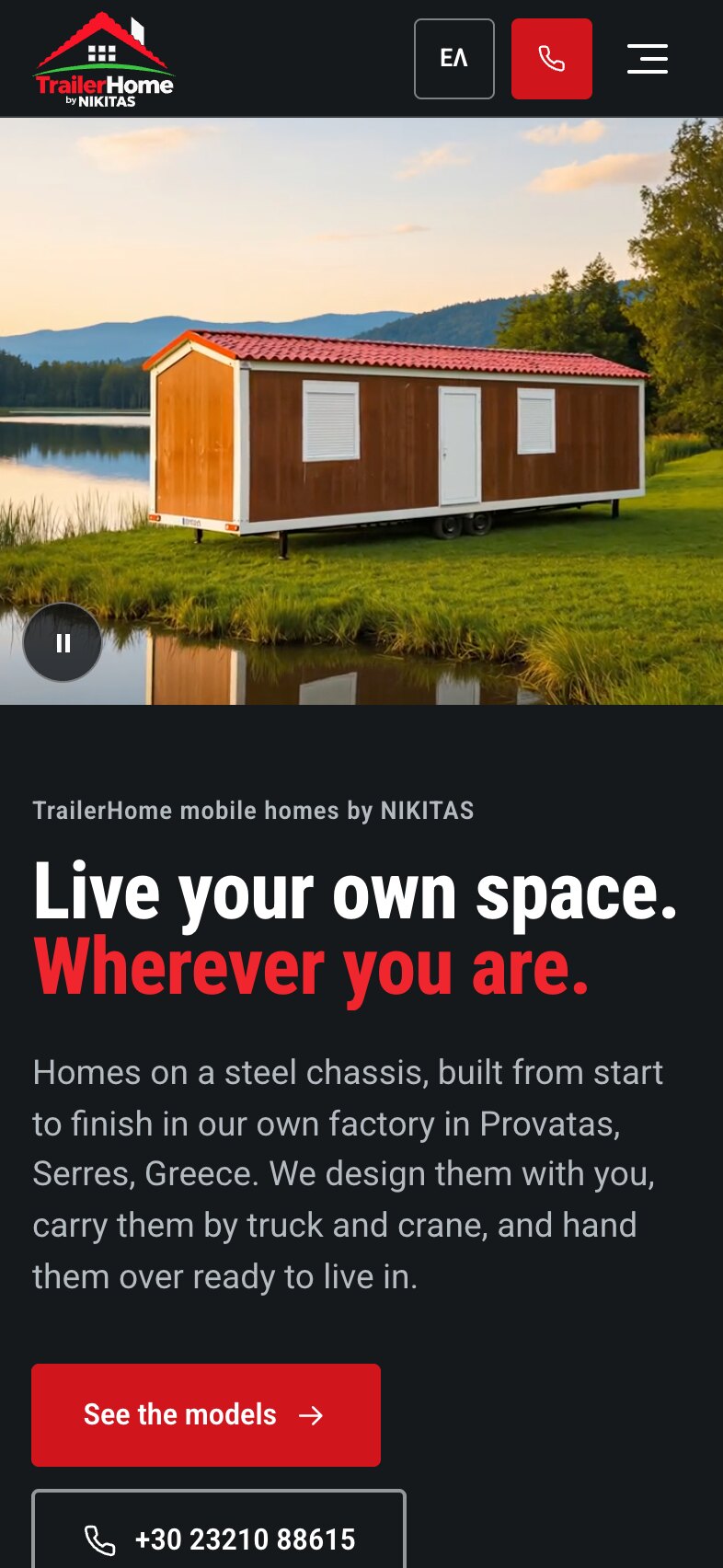
Same Story, Rebuilt for the Phone
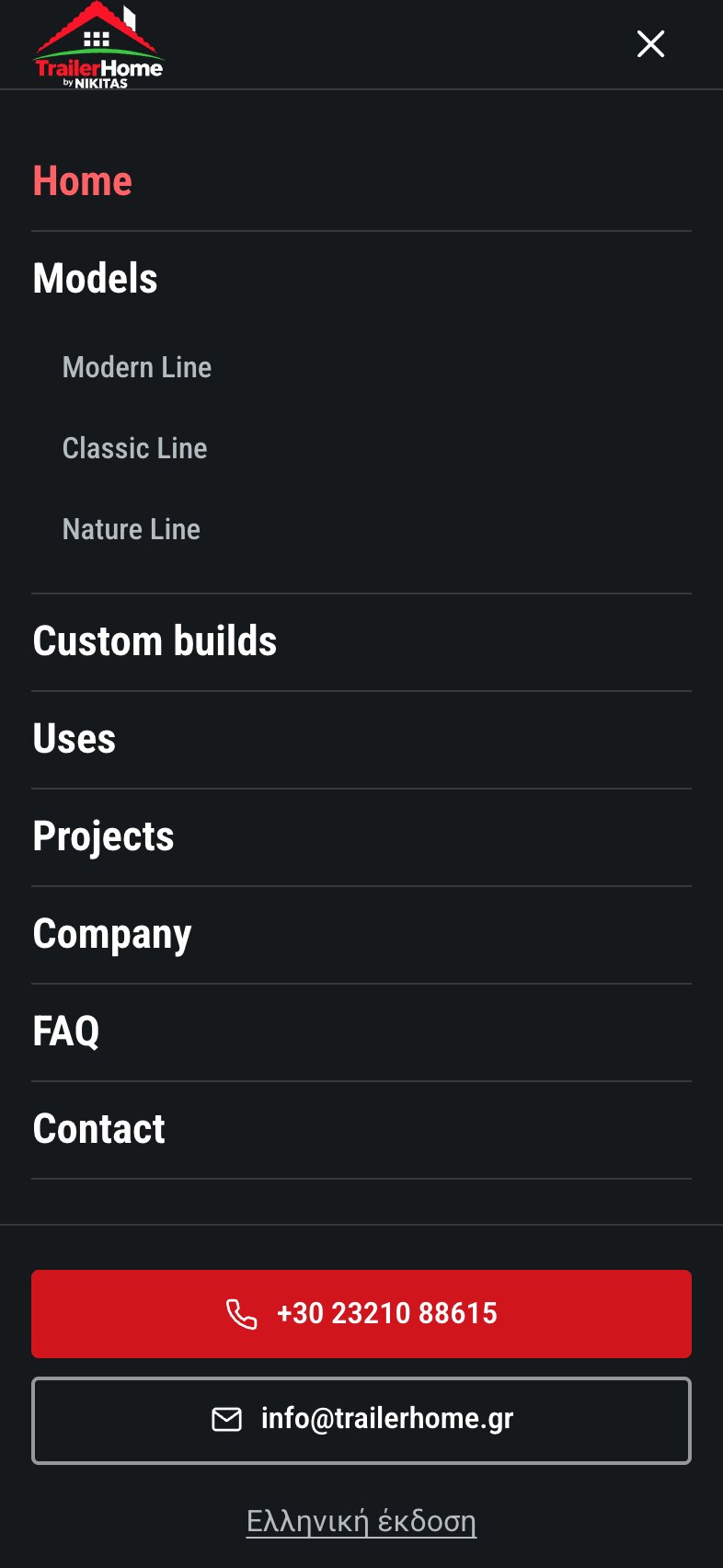
A Full-Screen Menu That Keeps the Phone Number in Reach
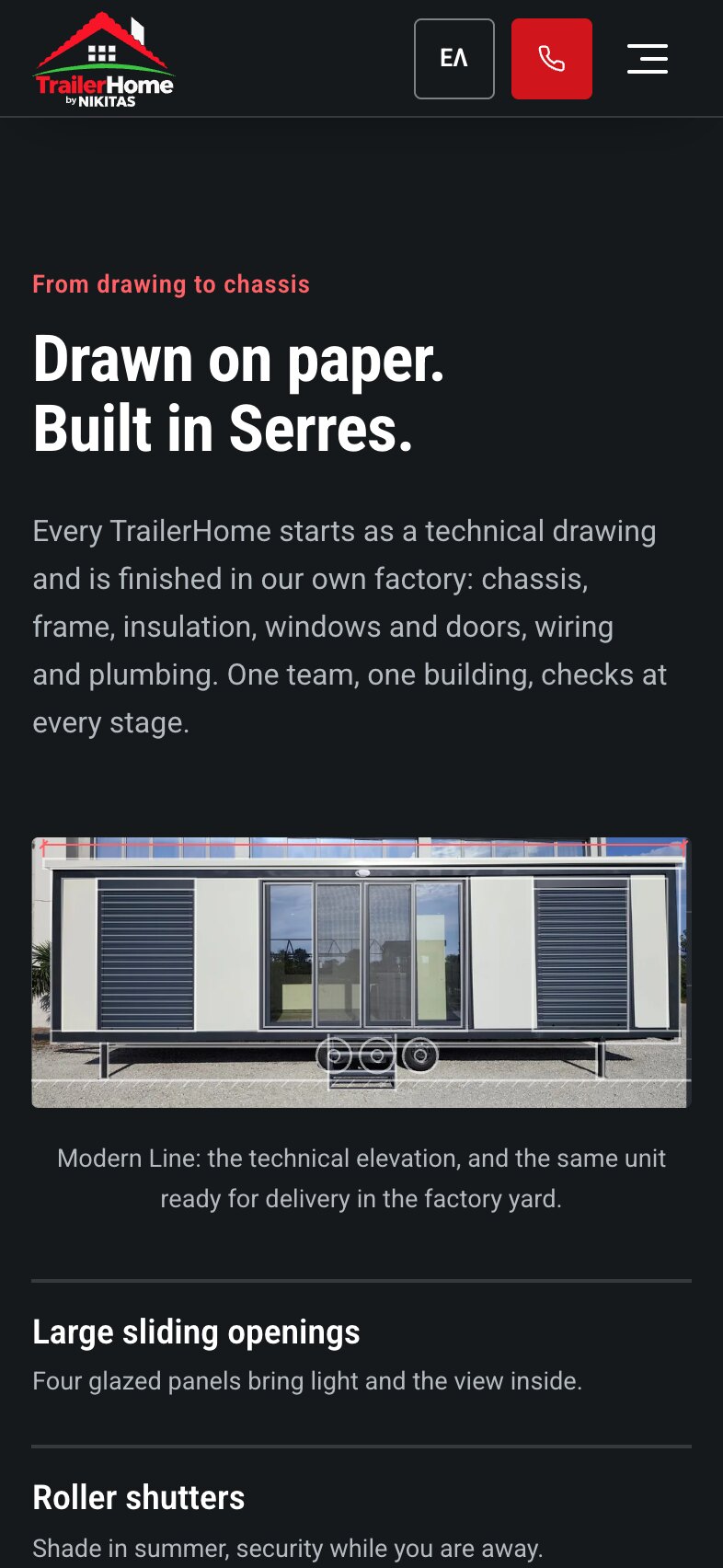
On Phones the Drawing Plays Once, Then Rests on the Photo
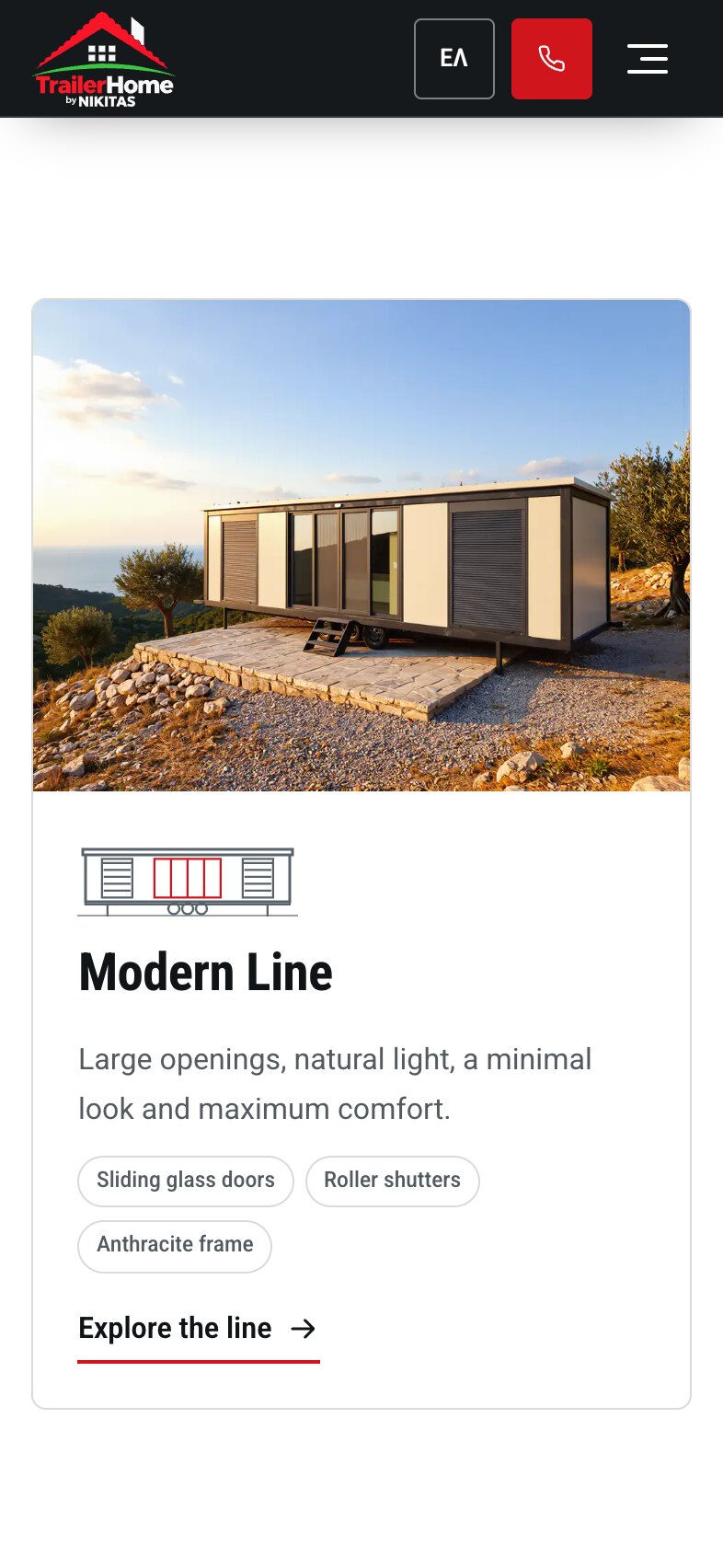
Every Line Introduced in a Single Card
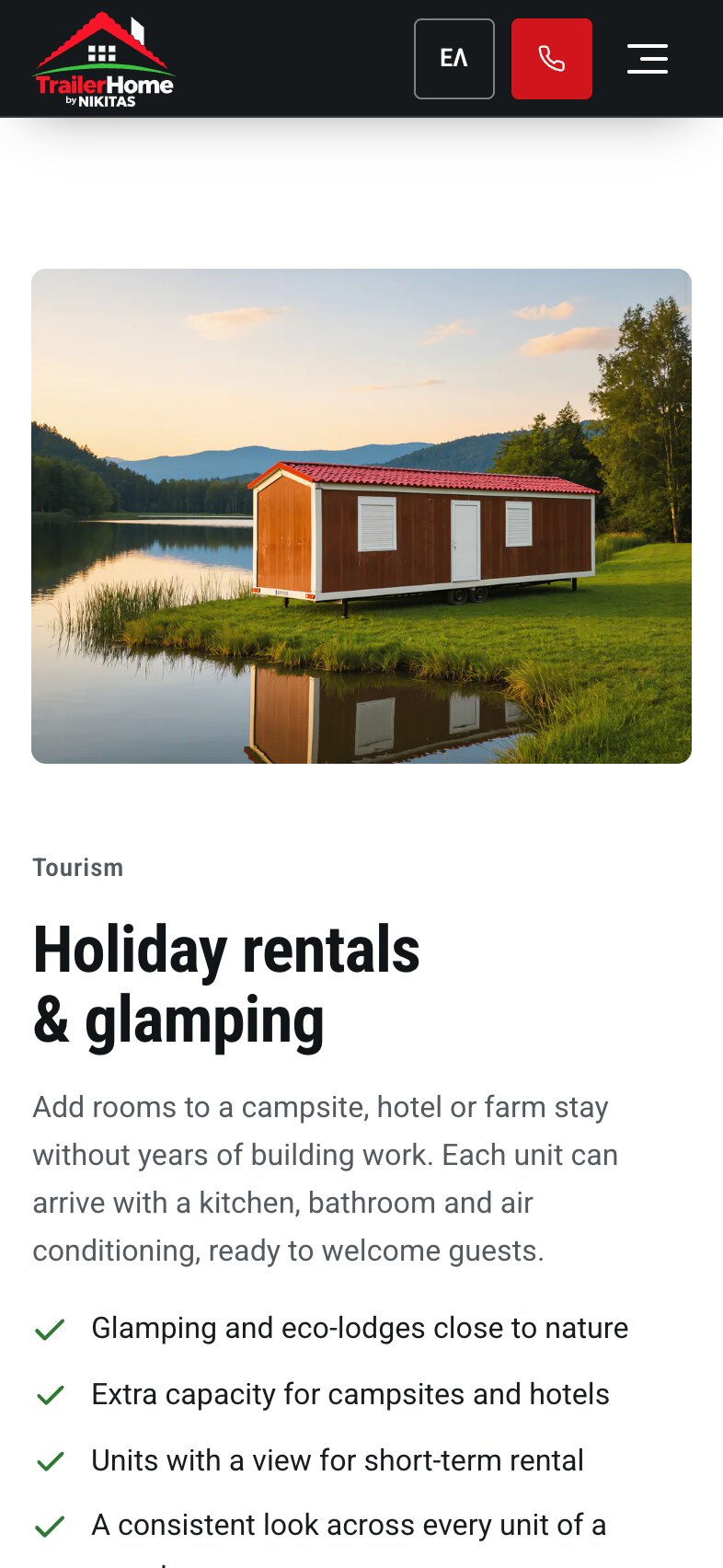
Written for the Use, Not Just the Product
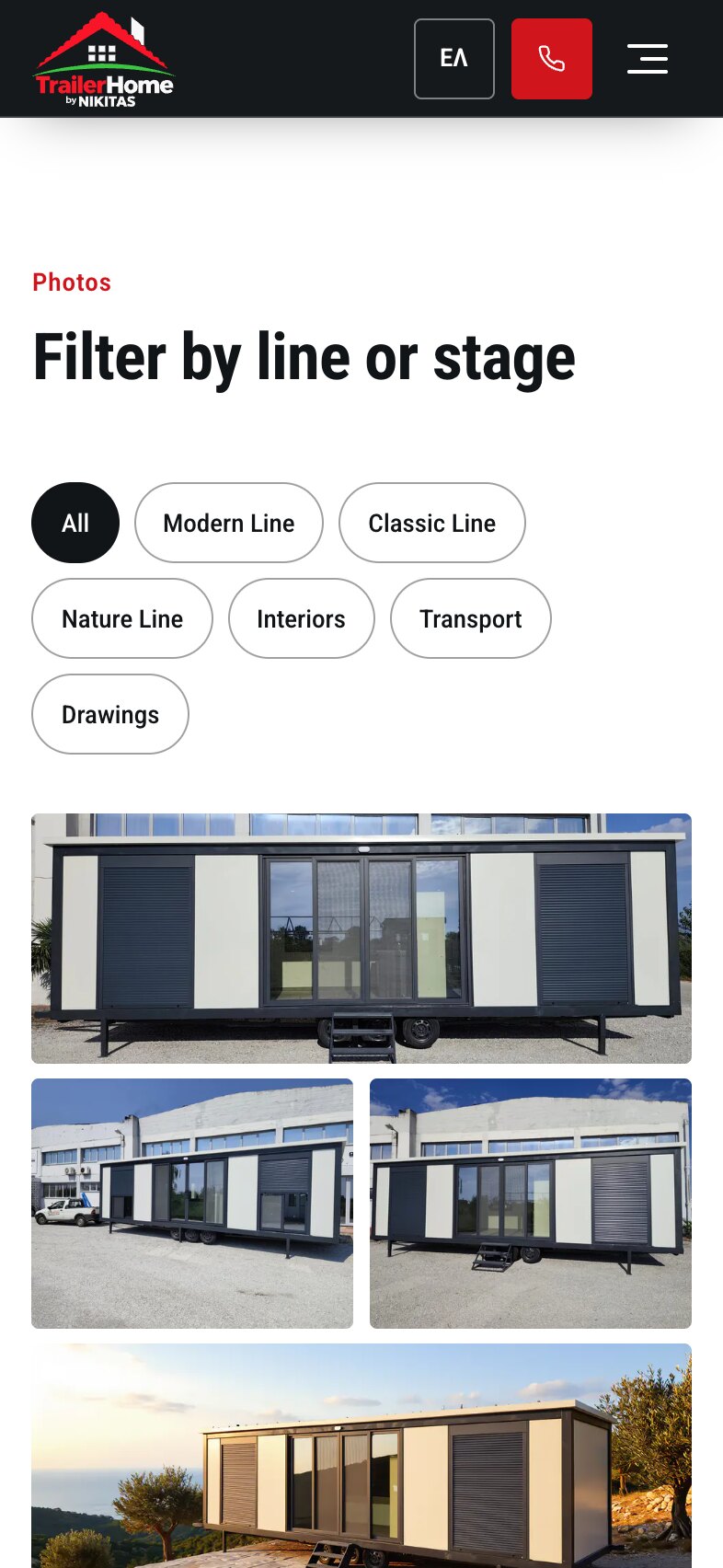
Seven Filters That Still Fit a Thumb
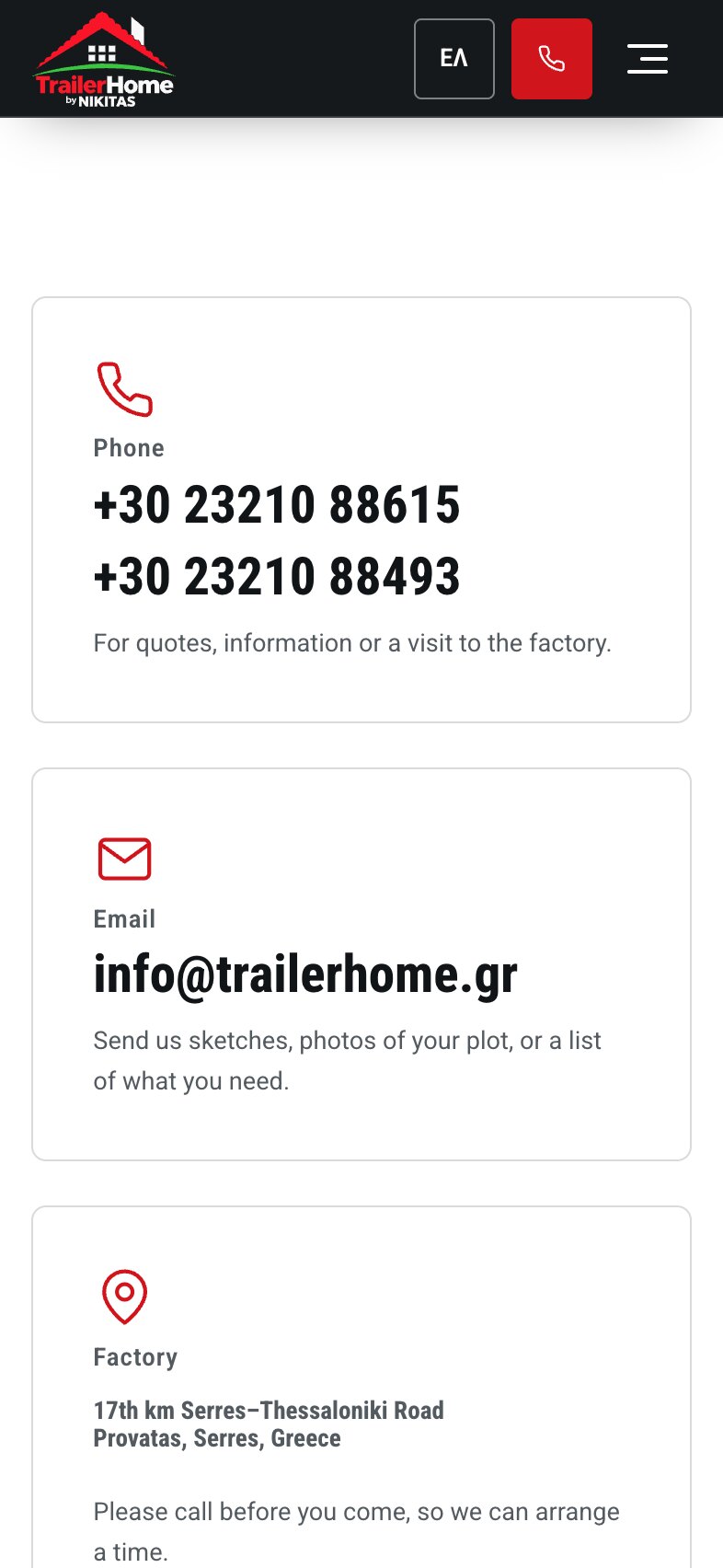
Two Numbers and an Email, in Type You Can Tap